Business
Leeds Business Supply Chain: Global Crises Impact
How Middle East tensions, heatwaves and geopolitical instability are disrupting supply chains for Leeds exporters handling £3.1bn in annual trade.
4 min read
Updated 2 h ago
Business
How Middle East tensions, heatwaves and geopolitical instability are disrupting supply chains for Leeds exporters handling £3.1bn in annual trade.
4 min read
Updated 2 h ago
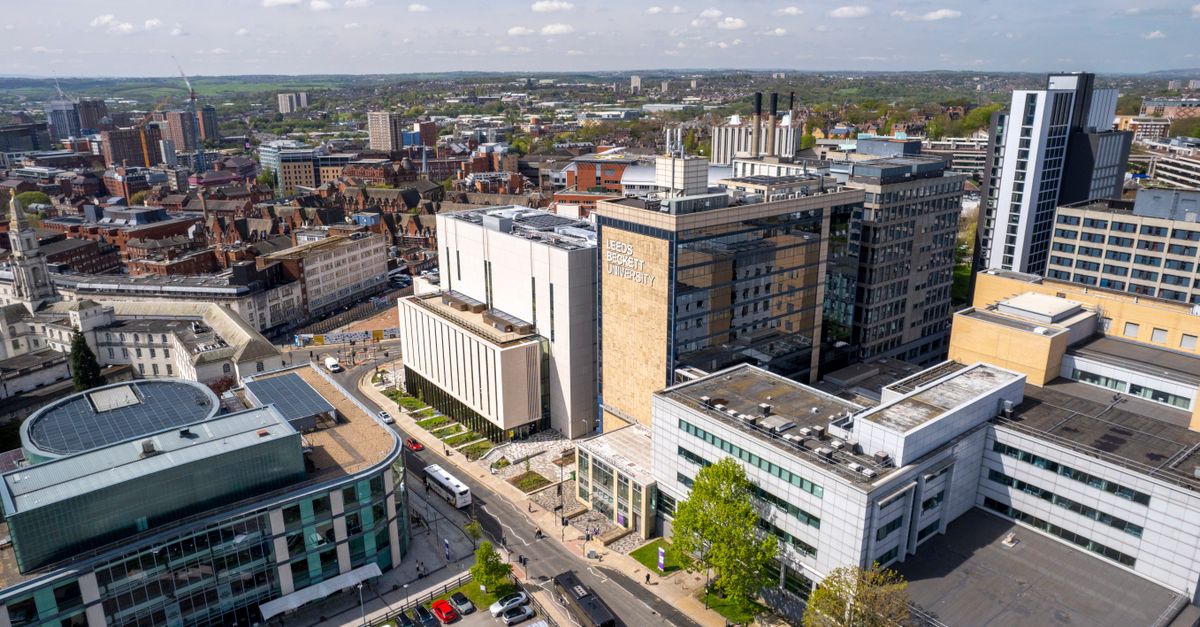
Leeds businesses opened their laptops on Friday morning to a world that looked, by most measures, more volatile than the one they navigated twelve months ago. Iran's Supreme Leader is being buried as Western governments scramble to define a post-nuclear-deal commercial relationship with Tehran. The Strait of Hormuz — through which roughly a fifth of the world's traded oil passes — is still twitchy after a period of ship seizures. And France recorded more than 2,000 excess deaths in a single heatwave peak, a figure that rattled European logistics networks that Leeds exporters depend on.
None of that is abstract for a city that shifted £3.1 billion worth of goods and services overseas in 2025, according to the West Yorkshire Combined Authority's trade data published in March. The businesses doing that shifting are clustered in Holbeck Urban Village, along the Kirkstall Road corridor and in the tech firms stacked above the cafes of Duke Street in the city centre. For many of them, the summer of 2026 is forcing decisions they had hoped to defer.
The death of Iran's Supreme Leader and the funeral in Tehran this week has sent traders back to spreadsheets they hoped to shelve. Brent crude edged above $91 a barrel on Thursday, its highest point since February, driven partly by uncertainty about whether US-Iran negotiations — which had raised hopes of sanctions relief and an oil supply increase — will now stall indefinitely. For Leeds-based manufacturers, particularly the small and mid-sized engineering firms in the Aire Valley Enterprise Zone, energy remains the biggest single cost pressure after wages.
Ahead of the summer, energy broker data showed average annual electricity bills for a mid-sized Leeds factory running around £180,000 — up roughly 34 percent on 2023 levels despite some wholesale price relief last year. Analysts at the Energy and Climate Intelligence Unit warned in May that any sustained Hormuz disruption could add another 8 to 12 percent to industrial energy costs by autumn. Firms that locked into fixed-rate contracts before April are insulated. Those that didn't are exposed.
The Leeds Business Improvement District, which covers the city centre and works with around 1,400 businesses, has been running an energy resilience programme since January. Its workshops at the First Direct Arena business suite, held monthly through Q1 and Q2, pulled in more than 300 attendees — a sign of how sharply the issue has cut through.
The European heatwave is creating a different kind of headache. France's road freight network slowed measurably during the hottest days in late June, with some perishable goods routes from southern Europe seeing delays of 48 hours or more. For Leeds food-tech startups and agricultural suppliers working out of the Thorpe Park business hub near Junction 46 of the M1, that is a direct operational hit.
Several logistics managers in the sector have quietly begun rerouting shipments through Rotterdam rather than Calais and Dunkirk, adding cost but buying reliability. The Port of Hull, 50 miles east of Leeds and the dominant gateway for Yorkshire's European freight, reported a 7 percent rise in booking inquiries from West Yorkshire companies in June compared with the same month in 2025 — partly as firms seek shorter sea crossings that avoid overland French routes entirely.
The broader picture is one of compounding risk rather than single-point crisis. West Africa flooding, Côte d'Ivoire deaths topping 59 this week, disrupts cocoa supply chains that feed into Leeds confectionery and food manufacturing. Ukraine conflict escalation squeezes Ukrainian grain markets that ripple into flour prices locally. Each shock is manageable in isolation. Together, they are forcing a rethink.
Leeds City Council's International Trade team is holding an emergency briefing on July 15 at the Civic Hall for businesses with turnover above £500,000 and significant export exposure. The session will cover hedging strategies, dual-sourcing options and how to access the government's UK Export Finance guarantees, which were extended in April to cover smaller firms with revenues down to £250,000. Any business that has been sitting on those options should not wait much longer to engage.
This article was compiled by AI and screened before publishing. See our editorial standards.

Business

Business
Business

Business
About this article
Published by The Daily Leeds
Spread the word
Daily brief
Free, in your inbox before 7am. Weekdays.
The Daily Network — local news across Australia